Problems with Numeracy Skills?
Today, dyscalculia is recognised as a neurological condition that causes number blindness, in much the same way as dyslexia causes problems with letters and words. Brian Butterworth, Emeritus Professor of Neuropsychology at University College London, reports that dyscalculia possibly affects more than 6% of the population. Butterworth describing dyscalculia
Now this condition is recognised tools, tips and techniques have been designed to enable people with dyscalculia to better manage maths and number and improve their self esteem as a consequence.
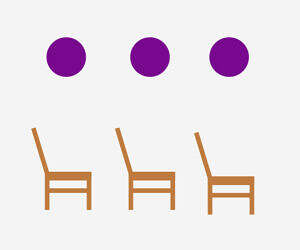
For a dyscalculic, numbers are problematic
As an example, someone with this condition has no understanding that 3 chairs is the same number as 3 sweets or 3 car
The ‘three-ness’ of those 3 disparate groups of objects is meaningless to them.
Other challenges faced by those with dyscalculia include problems telling the time, counting money and attributing a value to it. This in turn makes it difficult to manage time and finances.
Butterworth developed the Dyscalculia Screener for early identification of Dyscalculia. Dyscalculia and the Screener
For those who struggle with numeracy skills life can be difficult in all domains
There are the practical challenges presented by day to day living, in addition to the self esteem issues caused by the mis-perceptions of others.
Individuals with dyscalculia have been known to develop all manner of avoidance tactics so they may live their lives, as far as possible, in the absence of numbers. But, of course, as a long term solution, this is not practical.
Jane Emerson discussing what is dyscalculia and how to help.

Problems with memory?
In his biography Revelations, internationally renowned British climber Jerry Moffat refers to his not so successful school days
“by the age of 11 years I could only just about read, and my writing was poor. Numbers were a complete mystery.” (page 7)
Why did Jerry Moffat, have such a tough time with mathematics?
Chinn an experienced teacher and leading expert in understanding why mathematics can be difficult explains in Beliefs, Anxiety, and Avoiding Failure in Mathematics that there are embedded beliefs about the way in which the mathematics curriculum is often designed and taught. For example, the fundamentals such as times tables and number facts are best learnt when children are young. Informal surveys by Chinn across the UK indicate that around 50% of ten year olds fail to achieve this goal. For many children mathematics becomes a repetitive failure from an early age.
Moffat in Revelations, succinctly describes attitudes and beliefs about memory in the world of education.
“Some people go through school and they remember everything they are taught. They never have to revise and they sail through exams. These are the people who are seen as smart people. But often they are just lucky enough to have a very good memory for what they are taught. It doesn’t necessarily mean that they are smarter than people who don’t – or can’t – remember those things.” (page 8)
Chinn explains that anxiety has a negative effect on working memory making recall of number facts and times tables even more difficult. For many this anxiety, if not dealt with, is likely to persist. This will mean that everyday living, which involves numerical calculations or mathematical concepts, will be difficult and reduce employment chances and life opportunities.

Here is Professor Amanda Kirby talking about auditory and visual memory:
Problems with visual processing?
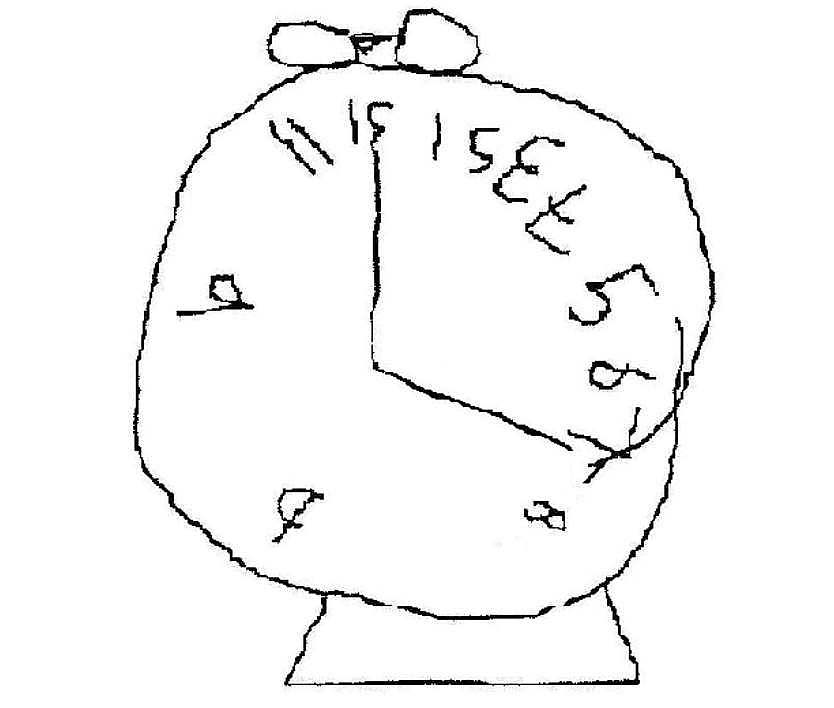
With poor binocular vision any learning involving vision will be more difficult. Stein in Dyslexia in Children explains how the behavior of the eyes skews the numbers on the clock to one side of the clock, along with the reversals of numbers.
The clock face is distorted for these individuals and to tell the time will be challenging. Hence eye behavioral correction exercises are top of the priorities in K4N for these types of students. Developing tracking skills for reading from left to right, along with eye hand co-ordination for recording are fundamental principles of K4N.
Often the confusion with direction such as left/right and b/d can extend to confusion with concepts such as clockwise. How can you tell the time from a traditional clock face if you cannot tell which direction is clockwise? K4N encourages the pupil to physically move up and down, left and right, clockwise and anticlockwise and in other ways to address the development of the directional senses.
Keith Holland - Behavioural Optometrist talking about visual problems and dyslexia
Is it a language problem?
Along with the issues of memory and visual processing comes language, whether that be of aquisition, interpretation or even processing time. Many of our recipients will not have had these skills addressed effectively in school and will move through the school years with little progress in mathematics. K4N is a developing program and is becoming an effective and meaningful tool to support and develop numeracy skills for the many adults and children who are disadvantaged in daily life due to lack of these skills.
Adequate and proficient numeracy skills are an essential aspect of successful daily life. As a teacher/kinesiologist working with a students/recipients whose goals are around developing specific numeracy skills, it is critical to remember that here are two individuals with two separate minds, bodies and spirits who must join forces to create the optimal learning environment. This means allowing the recipient’s own goals and aspirations to lead the development of the work with guidance and insight from the teacher/kinesiologist.
The strength of the programme is to be as creative as possible, as different recipients will respond to different techniques and approaches.